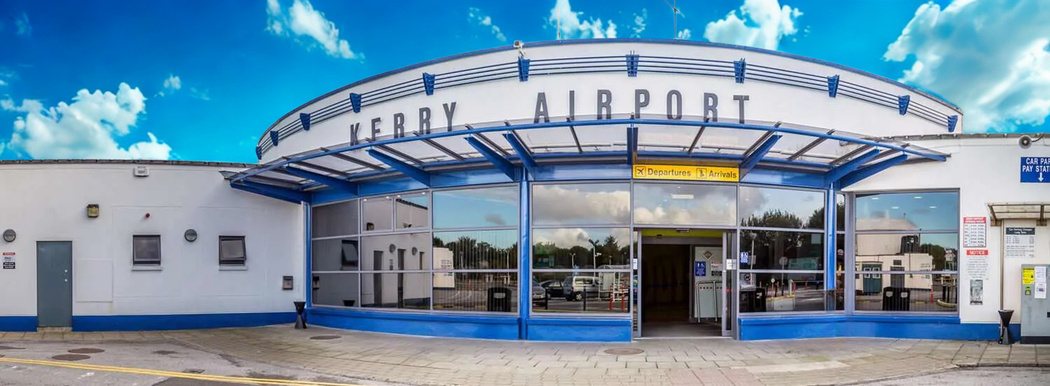
Kerry Airport wanted to become a greener regional airport. Its design team knew SEAI funding was available but did not have the time to manage the application. Carrig Energy Consultancy managed the funding process for them.
SEAI grant support covered approximately 30% of total project cost.
Background
Kerry Airport is committed to becoming a greener regional airport. It has signed up to Science Based Target initiatives, is exploring onsite energy generation, and plans a feasibility study for a large photovoltaic installation on campus alongside other green energy initiatives.
When the airport’s design team looked at funding the wider retrofit programme, they found the SEAI application process complex and time-consuming. Coordinating energy audits and showing that the proposed measures met SEAI’s “fabric first” requirements would have taken the team away from their engineering and architectural work.
The challenge
Time pressures
The design team — architects, engineers and energy auditors — had multiple projects running and no capacity to manage the extensive paperwork an SEAI application demands.
Funding complexity
Eligibility criteria, audit requirements and compliance documentation across multiple grant schemes were overwhelming. The risk was that the team would go ahead without funding and leave grants unused.
Need for coordination
Integrating grant requirements into design decisions — sequencing fabric improvements ahead of technology upgrades, for instance — needs specialist knowledge outside a normal design appointment.
How Carrig Energy Consultancy helped
Kerry Airport engaged Carrig Energy Consultancy to manage the funding process and make sure the project met every SEAI requirement.
- Energy audit and needs assessmentWe coordinated with EnerJ Building Services Engineering, the appointed energy engineers, and a registered energy auditor to carry out a comprehensive audit of the airport’s facilities. The audit confirmed baseline energy consumption, identified cost-effective measures — further lighting upgrades, improved insulation, high-efficiency HVAC and potential roof-mounted solar PV — and confirmed alignment with SEAI’s fabric-first approach.
- Grant identification and applicationWe identified the suitable grant routes and prepared the applications, compiling the audit reports, project scopes and cost estimates SEAI requires. This took the administration off the design team, and the applications were submitted complete and compliant.
- Project coordinationWe liaised between the airport, the design professionals and the contractors, sequencing the works so fabric improvements came first and making sure measures such as LED lighting and heat pumps were installed in line with grant conditions.
- Financial managementWe managed grant drawdowns, tracked costs and made sure funding covered eligible expenses — with transparent reporting to the airport’s stakeholders and support through post-project SEAI reporting.
Since 2012, Carrig Energy Consultancy has coordinated SEAI-funded energy upgrades to more than 1,000 homes and 60 community and commercial buildings: €21.4 million of investment and 15 GWh of energy saved.
Technical measures implemented
A fabric-first specification, with the mechanical upgrades following:
- High-performance glazing and doors — improved glazing and airtight doors, cutting heat loss and improving comfort.
- Roof and floor insulation — the fabric improvements that reduce heating demand and meet SEAI’s retrofit standards.
- Heat pump systems — two 75 kW heat pumps. The air-to-air unit provides space heating through cassette units; the air-to-water unit supplies hot water. Combined with high-performance insulation, these deliver low-carbon heating and cooling.
- Heat recovery ventilation — a mechanical heat recovery ventilation system maintains indoor air quality while recovering heat from exhaust air, reducing the heating load further.
- LED lighting — lighting replaced with energy-efficient LED fixtures. This element was not claimed for grant funding, but contributes substantial electrical savings and better lighting quality.

Results
Funding secured. SEAI grant support of €180,500 — around 30% of the €600,000 project cost — let the airport adopt a more ambitious scope than would otherwise have been possible.
Energy and carbon saved. The upgraded measures delivered thermal energy savings of 296,285 kWh and electrical energy savings of 100,000 kWh, for total carbon savings of 100,625 kg CO₂.


Integrated upgrades. The audit identified further opportunities — better insulation, high-efficiency heat pumps for heating and cooling the terminal, and progress on the PV feasibility study. Together these reduced overall energy use and greenhouse gas emissions.
Design team focus. With the grant process outsourced, the architects and engineers concentrated on technical design and stakeholder engagement, while funding and compliance were handled for them.
Client satisfaction. Airport management valued the ease of working with Carrig Energy, the clarity of the financial reporting, and the assurance that available grants were being maximised. The partnership strengthened the airport’s sustainability credentials and supported its mission to be a standard bearer for regional airports.

Lessons for design professionals
- Involve a grant specialist as early as you canEarly involvement means funding options are identified before design decisions limit eligibility, and the design sequence can follow grant requirements. Where a project is already further along, funding is often still available.
- Collaborate with auditorsPartnering with a registered energy auditor is critical. Auditors provide the technical data the application needs; the consultant handles the administration.
- Don’t underestimate the paperworkSEAI applications involve detailed documentation. Handing it to people who do it regularly saves time and reduces stress.
- Consider total cost of ownershipHigh-efficiency heat pumps, LED lighting and solar PV deliver long-term savings. Grant funding and a solid energy audit together make the upfront investment much easier to justify to a client.
Conclusion
Kerry Airport’s retrofit shows how a design team can secure significant funding for a client by working with a grant management specialist. Even where a client is already committed to other sustainability initiatives, grant funding can widen the scope and impact of a project. The design team can focus on the design, and the client gets the funding support available to them.
Download the full case study
Download the PDF
Kerry Airport — Streamlining Energy Upgrades · PDF
Planning a retrofit and wondering what funding you can access?
We work alongside design teams on commercial, community and public buildings — identifying the right SEAI route, preparing the application, and managing the grant through to drawdown. Early involvement is best, but funding is often still available at later stages.